


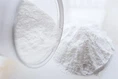
Recommended Dosage and Key Factors for Using Hydrochloric Precipitated Silica in Coatings

Hydrochloric precipitated silica, a high-purity form of amorphous silica, plays a critical role in modern coating formulations. Known for its uniform particle structure, high whiteness, and controlled porosity, it serves as a multifunctional additive that enhances coating performance in terms of appearance, durability, and workability.
In coatings, hydrochloric precipitated silica is primarily used as a matting agent, rheology modifier, and surface enhancer. However, its effectiveness largely depends on the amount incorporated into the formulation. Determining the correct dosage is therefore essential to achieving the desired gloss level, film hardness, and surface texture.
This article provides a practical overview of recommended dosage levels for various coating systems and examines the key factors influencing silica addition.
Recommended Dosage for Different Coating Systems
The optimal addition level of coating grade silica powder varies depending on the coating type, formulation viscosity, binder system, and target visual effect. The table below summarizes the commonly recommended dosage ranges and their corresponding functions:
Coating Type Recommended Dosage Main Function
Water-based acrylic paint 0.5% – 2% Matting rheology control
UV-cured paint 0.5% – 3% Matting improved abrasion resistance
Wood coatings 3% – 8% Matte effect improved surface feel
Industrial metallic paint 3% – 10% Matting optimized surface appearance
Powder coatings 0.1% – 0.5% Matting improved flowability
In general, lower dosages (0.5–3%) are sufficient for transparent, thin-film, or UV-curable coatings, where gloss control and film clarity are crucial.
Higher addition levels, typically 3–10%, are recommended for wood, metallic, or textured coatings to achieve deeper matting and enhanced tactile properties.
For powder coatings, where excessive filler addition can impact flow and cure performance, the silica content should remain below 0.5%.
Key Factors Affecting Dosage
Several technical parameters influence the optimal dosage of hydrochloric precipitated silica in coatings. Understanding these factors enables formulators to balance performance, cost, and appearance effectively.
Matting Efficiency
The matting efficiency of silica is primarily determined by particle size distribution and pore structure.
Particle Size Distribution:
A narrower particle size distribution increases matting uniformity and reduces the dosage required to reach a specific gloss level. Consistent particle sizing minimizes surface defects and ensures smooth, homogeneous coatings.
Porosity:
Highly porous silica (pore volume 0.8–2.0 cm³/g) exhibits significantly improved matting efficiency-up to 30% higher than lower-porosity grades. Such materials scatter light more effectively, allowing formulators to use less silica without sacrificing visual quality.
System Compatibility
The surface chemistry of the silica-hydrophilic or hydrophobic-directly affects its compatibility with different coating systems.
Hydrophilic Grades:
Designed for water-based coatings, hydrophilic hydrochloric precipitated silica disperses easily in aqueous systems. For optimal performance and flow control, the recommended addition is ≤5% of total formulation weight.
Hydrophobic Grades:
In solvent-based or UV-curable systems, hydrophobic silica demonstrates excellent compatibility and low moisture absorption. It can be added at levels up to 15% without negatively affecting film leveling or gloss consistency.
Selecting the proper surface treatment ensures stable dispersion, prevents agglomeration, and maintains formulation stability.
Performance Balance
While increasing the silica content can enhance matting or rheological properties, excessive addition may lead to performance drawbacks.
Excessive Addition (>15%)
Overloading silica can cause reduced film hardness, higher oil absorption, and potential surface roughness.
Optimal Dosage Determination
The most accurate approach is to establish an "addition amount–gloss curve" through gradient testing. By measuring gloss levels at various silica dosages, formulators can identify the optimal balance between visual appearance and mechanical strength.
Practical Guidance
When incorporating hydrochloric precipitated silica into coating formulations, several best practices are recommended:
Pre-dispersion: Pre-mixing the silica with resin, solvent, or wetting agents enhances dispersion efficiency and prevents flocculation.
Stepwise Addition: Gradually introduce silica during mixing to avoid localized over-concentration.
Testing & Adjustment: Always validate dosage through laboratory tests, considering gloss measurement, viscosity evaluation, and surface hardness analysis.
For formulators seeking to optimize performance across multiple coating systems, JK SILICA provides customized grades of coating grade silica powder with tailored surface properties and particle distributions.
👉
Contact JK SILICA today to receive technical support or customized recommendations for your coating formulations.