


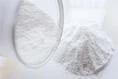

Jinsha Precipitated Silica Manufacturing Co., Ltd. is one of the leading manufacturers and suppliers of Food Grade Silicon Dioxide for Powdered Foods in China. With abundant experience, we warmly welcome you to buy high quality products made in China here from our factory. Contact us for more details.
Food Powder Applications | Grade JS-185C2
Food Grade Silica Powder for Anti-Caking and Free-Flow Performance
JS-185C2 is a precipitated silicon dioxide powder evaluated for dry food formulations that tend to clump, bridge in hoppers, or lose flow during packaging and storage. Typical evaluation areas include seasoning blends, instant coffee, cocoa powder, powdered dairy products, soup mixes, and dry flavor systems.
Food-use suitability depends on the specific formulation, destination-market requirements, current product documentation, and performance in a controlled application trial.
Request Specifications and Sample Information
JS-185C2 precipitated silicon dioxide powder for evaluation in dry food systems.
Product Grade
JS-185C2
SiO2, Dry Basis
≥ 97%
BET Surface Area
180–220 m²/g
Published Packing
20 kg/bag
The Production Problem
When a Free-Flowing Powder Stops Flowing
A dry blend can leave the mixer in good condition and still develop lumps before it reaches the customer. Humidity, fine particles, residual oils, temperature changes, package compression, and time in storage can change how the powder behaves. The practical consequences show up as uneven filling, hopper bridging, hard-packed bags, and inconsistent dispensing.
Clumping After Storage
Evaluate whether the finished blend remains loose after exposure to the humidity, stacking pressure, and storage time expected in distribution.
Hopper and Filling Problems
Compare discharge consistency, bridging, fill-weight variation, and powder buildup using the actual equipment and production settings.
Sensitive Powder Formulations
Review sugar, salt, dairy solids, flavor oils, and other formulation variables that can influence caking, segregation, and handling behavior.

Evaluate anti-caking performance in the finished food powder, not in the silica alone.
Application Fit
Food Powders Commonly Considered for JS-185C2
Seasoning and spice blends: Check whether the formulation remains free-flowing after humidity exposure and whether it feeds consistently through filling equipment.
Instant coffee, cocoa, and beverage powders: Evaluate clumping, reconstitution behavior, appearance, and compatibility with oil-containing ingredients.
Milk powders, creamers, and powdered fats: Review package compression, storage stability, sensory characteristics, and the requirements of the intended market.
Soup mixes, powdered sugar, and dry flavor systems: Compare flow, lump formation, dosing consistency, and performance after the finished product has been packed.
Explore food powder anti-caking applicationsPublished Technical Data
JS-185C2 Food Silica Powder Specifications
The values below reproduce the specifications published for this product grade. Use them to screen technical fit before requesting the current controlled technical data sheet and the certificate of analysis for the actual sample lot.
| Property | Published Specification | Unit / Reporting Basis | Published Test Method |
|---|---|---|---|
| Loss on drying | Maximum 5.0% | 2 hours at 105°C | HG/T 3065-2008 |
| Ignition loss | Maximum 7.0% | At 1000°C | HG/T 3066-2008 |
| DBP absorption | 2.6–2.9 | cm³/g | HG/T 3072-2008 |
| pH value | 6.0–8.0 | 10% aqueous suspension | HG/T 3067-2008 |
| Silicon dioxide content | Minimum 97% | SiO2, dry basis | HG/T 3062-2008 |
| BET specific surface area | 180–220 | m²/g | HG/T 3073-1999 |
| Soluble salts | Maximum 0.5% | Expressed as Na2SO4 | Confirm on the current TDS |
Specification note: Published limits are screening values, not a substitute for a current lot-specific COA. BET surface area, DBP absorption, and SiO2 content do not independently establish anti-caking performance, food-use compliance, or suitability for a particular formulation.
Understanding the Specification
What These Numbers Mean for a Food Powder Buyer
BET Surface Area
The published range helps compare grades measured under the same method. It does not predict how a seasoning, creamer, or cocoa blend will behave after mixing, compression, and storage.
DBP Absorption
This is a method-specific structural screening measurement. It should not be treated as a direct measure of moisture uptake, flavor-oil loading, or performance with a different test liquid.
Moisture, pH, and Soluble Salts
These values support incoming-material review and formulation compatibility checks. Final acceptance still depends on the finished powder, its packaging, and the applicable food-grade documentation.
Qualification Before Purchase
Test JS-185C2 in the Powder You Actually Sell
A meaningful comparison starts with the current commercial formula and the production problem that needs to be solved. Keep the recipe, ingredient lots, blending sequence, equipment, and packaging conditions consistent between the control and the candidate material.
01
Establish the Baseline
Record the current powder's flow, visible lumps, hopper discharge, fill-weight consistency, and condition after storage.
02
Run a Controlled Trial
Compare the current formulation with the candidate grade using agreed inclusion levels that remain appropriate for the target market.
03
Challenge the Package
Check the packed powder after realistic humidity exposure, stacking pressure, transport conditions, and the intended storage period.
04
Confirm Lot Consistency
Match the trial sample to its lot COA and review additional production batches before approving an ongoing supply arrangement.
Include sensory checks when relevant: Evaluate appearance, mouthfeel, dispersibility, and any visible change in the finished food powder. A favorable raw-material specification alone cannot establish finished-product acceptance.
Regulatory Review
Food-Use Approval Is Market Specific
In the United States, 21 CFR 172.480 sets conditions for silicon dioxide used as an anti-caking agent, including demonstrated technical effect, the amount reasonably required, and the applicable maximum for that regulated use.
For European-market reviews, the EFSA evaluation of silicon dioxide E 551 identifies material characterization and impurity control as relevant considerations.
Neither a product name nor a general industrial specification establishes E 551 conformity, FDA-related suitability, or approval for a particular food category. Confirm the documentation for the exact grade, production site, and supplied lot.
Buyer Documentation
What to Request Before Approval
Current TDS: Grade identification, controlled specification limits, test methods, reporting basis, and document revision.
Lot-specific COA: Sample lot number, actual analytical results, release limits, and traceability to the supplied material.
Food-use documentation: Applicable market declarations, manufacturing information, and impurity data required for the intended food category.
Additional records: SDS, packaging details, storage guidance, and supporting certificates when relevant and available.
Batch history: Request consecutive production-lot data when supplier qualification or formulation sensitivity requires a broader consistency review.
Where Additional Technical Review Is Necessary
A grade should not be approved solely because its SiO2 content or BET surface area resembles an existing ingredient. Differences in manufacturing controls, physical form, impurity profile, and formulation behavior can change the purchasing decision.
Infant nutrition, specialized dietary products, unusually hygroscopic powders, and high-oil flavor systems may require additional market-specific documentation and more demanding validation. An industrial, feed, or dental grade is not interchangeable with a documented food-use grade merely because the material is also called silicon dioxide.
If the requirement is primarily liquid carrying rather than powder anti-caking, define the actual liquid, loading target, finished-powder flow, and storage conditions before selecting a grade.
Packaging and Grade Comparison
Published Packing: 20 kg per Bag
Confirm the current bag construction, palletization, order quantity, loading plan, shipping documents, and storage recommendations before placing a commercial order. When JS-185C2 does not match the formulation target, compare other documented food-use grades.
Technical and Purchasing Inquiry
Request the JS-185C2 TDS, COA, and Sample Details
Tell us which food powder you manufacture, where the product will be sold, what flow or caking issue you need to solve, and which documents your quality team requires. Include your current grade, packaging format, storage conditions, and qualification criteria when available.
Send a Product and Documentation InquiryBuyer Questions
Frequently Asked Questions About Food Grade Silica Powder
What is food grade silica powder used for?
Food grade silicon dioxide is evaluated as an anti-caking and free-flow ingredient in dry food systems where its use is permitted. Common purchasing scenarios involve seasoning blends, cocoa, instant coffee, powdered dairy products, soup mixes, and dry flavor formulations.
Is JS-185C2 automatically suitable for every food application?
No. Suitability depends on the exact grade documentation, applicable food category, destination-market rules, impurity controls, inclusion level, and results in the finished formulation. A matching product name or chemistry is not enough for food-use approval.
Does BET surface area or DBP absorption guarantee better anti-caking?
No. BET and DBP values help screen and compare raw materials when the measurement methods are equivalent. Anti-caking performance must be verified in the actual powder under realistic mixing, packaging, humidity, and storage conditions.
How should the correct inclusion level be determined?
Use a controlled formulation trial to identify the amount needed for the intended technical effect, then confirm that the selected level is permitted for the specific food category and destination market. A regulatory maximum is not a recommended formulation dosage.
Which documents should be reviewed before a bulk order?
Start with the current TDS, the COA for the sample lot, applicable food-use documentation, and the SDS. Depending on the project, also request impurity results, packaging information, manufacturing-site details, and production-lot history.
Hot Tags: food grade silicon dioxide, food grade silica powder, anti-caking agent for food, silica for powdered foods, food powder flow aid, precipitated silica food grade, silicon dioxide supplier, Silica Price, Precipitated Silica, Silica Carrier


