


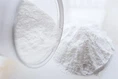
The Impact of Moisture on Silica
What's the impact of moisture on silica products?
Moisture plays a critical role in the precipitation of silica. The water content in silica can be divided into two categories, namely, the surface water and the bound water. The surface water can be removed easily through heating. If the amount of surface water is too low, it reduces the number of active sites on the silica surface, promoting the aggregation of silica in mixing, making it difficult to diffuse in rubber. This not only reduces the degree of sulfuration, but also affects reinforcement effect. On the other hand, the more surface water there is, the better the mixing performances are. The powder is more fluid, there is less dust, and the rolling and vulcanization rates are slightly faster.
However, if the moisture content is excessively high, the silica generates excessive heat, becoming brittle and caking, causing uneven dispersion, easy formation of bubbles and reduction of mechanical properties of the vulcanized rubber. In general, 6% to 8% of surface water is optimal for protecting the silica molecules, avoiding particle aggregation and achieving better mechanical properties. Bound water is relatively stable inside the silica and can only be removed above 400℃. The content of bound water is between 4.0% and 7.0%. If there is too much bound water, it indicates the presence of a high amount of residual gel after reacting, leading to small activity and poor reinforcement effect for the final product. But if there is too little bound water, the tendency toward sandification is high, which also has a negative effect on the reinforcement.
In summary, managing moisture content is critical to obtain good performance and properties from silica. Therefore, it is essential to maintain the proper level of moisture to achieve the best quality of the final product.
Contact Us
Tel: +86-592-5528715
Fax: +86-592-5528716
Email: jk@jksilica.com
Add: Gaosha Industrial Zone, Sha County, Sanming, Fujian, China