


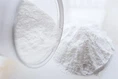
The difference between fumed silica and precipitated silica
White carbon black is a general term for white amorphous powder silicates and silicate products. It mainly refers to precipitated silica, fumed silica, ultrafine silica gel and aerogel, including powdered synthetic aluminum silicate and calcium silicate. According to the production method, silica can be divided into precipitation silica and fumed silica (scientific name: fumed silica).

Fumed silica is white amorphous flocculent translucent solid colloidal nanoparticles in normal state. It is non-toxic and has a large specific surface area (100 ~ 400m2 / g). Fumed silica is all nanometer grade silica. The purity of the product is more than 99.8%, the original particle diameter is 10~40nm, and the precipitated silica is divided into traditional precipitated silica and special precipitated silica. The former refers to silica, which is based on acid (sulfuric acid, hydrochloric acid, etc.), CO2 and sodium silicate. The latter refers to the technology of high gravity, sol-gel, and so on. Silicon dioxide produced by special methods such as crystal method, two crystallization method or reverse micelle microemulsion method.
1. Production method of silica
The traditional method of preparing silica is to use sodium silicate, silicon tetrachloride and tetraethyl orthosilicate as silicon source. Except sodium silicate, other costs are high. The new method uses cheap nonmetallic ore as silicon source, which greatly reduces the production cost of silica.
1.1 gas phase method
It is mainly chemical vapor deposition (CAV) method, also known as pyrolysis method, dry method or combustion method. Its raw materials are silicon tetrachloride, oxygen (or air) and hydrogen, which are formed by reaction at high temperature. The reaction equation is as follows
SiCl4+ 2H2+ O2—>SiO2+4HCl
After drying, dedusting and filtering, air and hydrogen are sent to the synthetic hydrolysis furnace. The raw material of silicon tetrachloride is sent to the evaporator for heating and evaporation, and the dried and filtered air is taken as the carrier and sent to the synthetic hydrolysis furnace. After silicon tetrachloride is gasified at high temperature, it is hydrolyzed with a certain amount of hydrogen and oxygen (or air) at high temperature. At this time, the particles of fumed silica are very fine and form aerosol with the gas, which is not easy to capture. Therefore, it is first aggregated into larger particles in the aggregator, and then collected by the rotary air separator, and then sent to the deacidification furnace to purge fumed silica with hot air or auxiliary steam Black to pH 3.6 or above is the finished product.
1.2 precipitation method
The precipitation method, also known as sodium silicate acidification method, uses sodium silicate solution to react with acid to obtain silica through precipitation, filtration, washing, drying and calcination. The reaction equation is as follows
Na2SiO3 + 2H + - > silica + 2Na + + H20
Silica is an indispensable reinforcing material in rubber industry. It is widely used in tire, rubber products, resin, coating, ink, pesticide, papermaking, pharmaceutical and other industrial fields. At present, more than 90% of silica in China is used in rubber industry, 60% of which is used in shoe industry.
2. Comparison of fumed silica and precipitated silica
2.1 structural differences between fumed silica and precipitated silica
Fumed silica is neither simply crushed nor specially dried. In any case, the smallest particle is the primary particle, but it will agglomerate more or less (because there are a lot of silicon hydroxyl groups on its surface), and the special surface is its most important property. Silica gel has a large internal surface area, which is the reason why it has strong adsorption capacity. In contrast, the primary particles of fumed silica are hydrolyzed by flame, which has only external surface area. This also explains why the rheological properties of many systems combined with fumed silica have been greatly improved, such as the application of fumed silica in powder coatings.

Figure 1. Comparison of structure models of fumed silica and precipitated silica
2.2 the difference of silicon hydroxyl number between fumed silica and precipitated silica
The difference of drying loss of silica has a great influence on the product characteristics and application performance. The lower the drying loss of silica, the better. For example, the lower the drying loss, the better the insulation of silicone rubber used for cable. Low drying loss can increase the stability of adhesives and sealants added with silica during storage. In fact, the main difference between silica lies in the different silicon hydroxyl groups (that is, SiOH / Nm2). The amount of silicon hydroxyl of hydrophilic fumed silica is between 2 and 3. In contrast, the content of silicon hydroxyl of precipitated silica is about 6. The content of silicon hydroxyl of surface modified silica is less than 1.
2.3 difference of silicon purity between fumed silica and precipitated silica
The difference in purity of silica is also noteworthy. As far as anions are concerned, fumed silica contains only a small amount of chloride ions and metal oxide impurities. The anions of precipitated silica include acid radical ions, alkaline ions and alkaline earth metal ions (about 1000 ppm). The difference of process technology leads to the difference of product purity.
Fumed silica >99.8%
Precipitated silcia .95%