


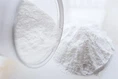
Hydrochloric Acid-Processed Silica for Battery Separators: Performance Benefits, Selection Criteria, and Applications
In high-performance lithium-ion cells, the separator is critical for safety and ionic transport. Hydrochloric acid-processed precipitated silica provides a cost-effective, high-purity ceramic solution that enhances electrolyte wettability, thermal stability, and mechanical robustness for separators used in EV and energy storage applications.
1. What Is Hydrochloric Acid-Processed Precipitated Silica?
Precipitated silica is produced by acidifying sodium silicate (water glass). When hydrochloric acid (HCl) is used as the acidifying agent, the resulting silica typically offers higher washing efficiency, lower residual metal impurities, more consistent surface chemistry, and improved pH stability compared with some other acid routes. The production sequence-acidification, precipitation control, filtration and multiple washings, then drying and classification-enables tight control of particle size, surface area, and impurity levels.
2. Hydrochloric Acid-Processed vs. Sulfuric Acid-Processed Silica
Although both products are precipitated silica, the acid choice significantly affects final properties:
- Purity & Impurity Levels: HCl-route facilitates deeper washing and more efficient removal of ionic residues, allowing Fe, Cu, Na and other metals to be controlled to ppm or sub-ppm levels.
- Coating Compatibility: HCl-derived silica typically yields better dispersion stability and more consistent silanol surface groups-key for uniform ceramic coating slurries.
- pH Stability: Narrower pH fluctuation benefits binder systems such as PAA, CMC, and PVDF.
3. Why Hydrochloric Acid-Processed Silica Is Ideal for Battery Separators
3.1 Builds an Ion-Conducting "Highway": High Porosity & Controlled Pore Structure
Nanoscale silica particles form a stable 3D microporous network that increases overall porosity and creates interconnected channels for ion transport. This architecture lowers internal resistance and enhances fast-charging and high-rate discharge performance.
3.2 Exceptional Electrolyte Wettability and Liquid Retention
Abundant –OH (silanol) groups on silica surfaces attract polar electrolyte components (EC, EMC, DEC), enabling rapid wetting, uniform electrolyte distribution, and strong liquid uptake-essential for long cycle life and stable SEI formation.
3.3 Superior Thermal Stability: A Safety "Firewall"
Silica's inorganic nature and high thermal resistance act as a rigid skeleton over polyolefin films, preventing severe shrinkage or melt during thermal events and reducing the risk of internal short circuits and thermal runaway.
3.4 Mechanical Reinforcement Against Puncture and Dendrites
Uniformly dispersed nanoscale silica increases puncture resistance and tensile strength, protecting separators from physical damage during winding, stacking, and cycling.
4. How to Select Battery-Grade Precipitated Silica
Not all precipitated silica is suitable for battery separators. Critical selection parameters include:
- Ultra-high purity: Strict control of Fe, Cu, Na, Zn and other metal impurities.
- Particle size & distribution: D50 commonly in the suitable range depending on coating design; low D90 to avoid oversized particles that may puncture the substrate.
- BET specific surface area: Balanced BET to ensure adequate liquid uptake without excessive binder absorption.
- Batch-to-batch consistency: Stable morphology, moisture, and pH to ensure coating quality in mass production.
5. Application Methods in Separator Manufacturing
Ceramic-Coated Separators (Most Common)
Typical flow: formulate silica with PVDF, PAA, CMC or hybrid binders → prepare aqueous or NMP slurry → coat on one or both sides of PE/PP membrane → dry and calender. Ceramic-coated separators deliver enhanced thermal stability and improved electrolyte wetting.
Composite Separators
Silica can be blended directly into polymer matrices (melt blending, phase inversion) and processed into films via stretching-dispersing silica throughout the film matrix rather than as a surface coating.
6. Why Choose JK SILICA for Battery-Grade Hydrochloric Acid-Processed Silica?
JK SILICA is a specialized manufacturer of functional silica materials with production and R&D capabilities tuned for battery applications:
- Extreme purity: advanced washing and purification, closed automated production and strict raw material controls.
- Product series & customization: multiple BET levels, D50 options, and surface modification services to match coating processes.
- Technical support & supply capacity: application engineering for slurry formulation, on-site troubleshooting, and stable mass production supply.
7. FAQs About Battery Separator Silica
-
- Q: Can silica improve fast-charging performance?
- A: Yes-by creating low-resistance ion pathways and improving electrolyte accessibility, silica-based coatings support enhanced fast-charging behavior.
- Q: What binders are compatible with silica?
- A: Common binders include PVDF, PAA, CMC, SBR and hybrid systems; binder selection depends on coating solvent and drying strategy.
- Q: How does silica improve thermal safety?
- A: The ceramic coating acts as a rigid skeleton that reduces PE/PP substrate shrinkage during thermal events, lowering short-circuit risk.
- Q: What is the typical D50 for separator coating silica?
- A: D50 typically ranges from 0.5 to 2.5 μm depending on design and processing needs.
JK SILICA · Battery Materials Division · Technical Support: jk@jksilica.com