


How Precipitated Silica Improves Battery and Energy Materials | Silica for Battery & Energy Storage
How Precipitated Silica Improves Battery and Energy Materials
The demand for more efficient, longer-lasting energy storage solutions is driving major advancements in battery technologies. Precipitated silica, a highly versatile material, is playing a key role in improving battery performance, specifically in terms of battery capacity, stability, and the development of battery separators. This article explores the crucial role of silica in modern battery and energy storage solutions.

What is Precipitated Silica?
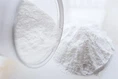
Precipitated silica is a white, powdery substance made from silicon dioxide (SiO₂), produced through a chemical process involving sodium silicate and sulfuric acid. This highly porous material has a large surface area, which makes it an ideal material for many applications, including batteries. Silica enhances the conductivity and stability of various battery components, making it essential for modern energy storage devices.
Applications of Precipitated Silica in Batteries
Improving Battery Capacity
One of the most significant benefits of precipitated silica for battery applications is its ability to enhance battery capacity. Studies have shown that silica's large surface area increases the energy density of electrodes, allowing them to store more ions and hold charge more effectively. This leads to higher capacity batteries with greater energy retention over time.
As highlighted by recent research published in the "Journal of Power Sources", incorporating silica into lithium-ion battery electrodes not only boosts energy storage capacity but also improves cycling stability, making batteries more efficient over their lifespan.
Improving Battery Stability and Longevity
Silica also plays a crucial role in enhancing battery stability. By stabilizing the structure of the electrodes and preventing the growth of dendrites-tiny structures that can cause short circuits-precipitated silica improves the safety and longevity of batteries. This characteristic is particularly important in high-energy applications like electric vehicles (EVs) and renewable energy storage, where long-lasting performance is essential.
According to "Battery University", using silica for battery components significantly reduces internal resistance, improving both battery life and overall efficiency. As battery technology evolves, silica's role in preventing degradation and enhancing performance is becoming increasingly vital.
A "battery separator" is a critical component that ensures the positive and negative electrodes do not come into direct contact while still allowing for ion flow. "Precipitated silica" is often used in the production of high-performance separators. Its high surface area and porosity allow the separator to maintain excellent ion conductivity while providing strength and stability.
Additionally, silica-based separators enhance thermal stability. In high-performance batteries, such as those used in electric vehicles, maintaining separator integrity under extreme temperatures is crucial. Silica for battery separator applications ensures the separator remains stable, preventing battery failure due to heat buildup.
The Potential of Precipitated Silica in Energy Storage
In addition to its use in traditional batteries, precipitated silica has significant potential in other energy storage technologies. For example, in supercapacitors, silica can be used to improve energy density, allowing for more efficient energy capture and release. Furthermore, the use of silica in **solid-state batteries** is being explored to improve electrolyte stability and boost performance in next-generation energy storage solutions.
The role of silica in **energy storage** is expanding, as manufacturers seek more efficient, durable, and safe materials for a variety of energy storage devices. As demand for clean energy solutions grows, the integration of silica into next-gen batteries and storage devices will only increase.
Challenges and Future Trends for Precipitated Silica in Battery Technologies
Despite the clear advantages of **precipitated silica** in battery applications, there are challenges to overcome. The cost of producing high-purity silica suitable for **battery** applications can be high, and scaling up production to meet demand is still a work in progress.
Moreover, as battery technology continues to evolve, researchers are working to develop even more efficient silica-based materials. New innovations in silica manufacturing and material science will likely reduce costs and enhance the performance of silica-based components, making it an even more integral part of future energy storage solutions.