


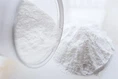
Detection of Physicochemical Index of Precipitated Silica
(Laser Particle Size Detection (Main Measuring Method of High Dispersion Silica)
Laser particle size measurement method: According to the application purpose, the precipitated silica mascots were crushed to different degrees, and then the particle size distribution of the crushed samples was determined by laser particle size analyzer.
For example, in order to simulate the input of strong shear energy in rubber mixing process, JS-185 needs to be crushed by ultrasound before testing. The measured particle size distribution results can well simulate the actual dispersion of JS-185 in rubber formulation.
Significance of Laser Particle Size Detection: Precipitated silica powders are composed of many independent, different morphologies and particle sizes of crushable particles. The test results simulate the particle size distribution of these particles in the actual application process after being crushed by force. This method is the best method to identify the dispersibility of high dispersed silica in tires, and also an important means to control the quality of other precipitated silica. For example, FOOSIL S-HTV1-for silicone rubber applications generally requires that the particle size distribution range be between 6-15 microns at low breakage.
Laser Particle Size Measurement

Meaning of D50: The average particle size of powder is usually expressed by D50, also known as the median diameter of volume. When all the particles in the powder are arranged from small size to large size and the cumulative volume reaches 50% of the total volume, the corresponding particle size is D50 of the powder.