


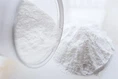
Application of Hydrophobic Silica JS-682 in Organic Silicon Defoamer
JS-682 produced by Jinsha Precipitated Silica Manufacturing Co., Ltd. is a hydrophobic silica modified by in-situ liquid phase surface modification technology using dimethylsiloxane as the main modifier. The specific surface area is 170 +20 m2/g, the primary particle size is less than 25 nm, the particle size of the agglomerate is about 5 microns, and the content of SiO 2 is not less than 98%. It is a multi-functional additive.
As an important auxiliary agent in industry, defoamer is used in many fields, such as textile, paper-making, petroleum, foods, pharmaceutical and so on. Defoamers are more and more specific, since the foaming mechanism and process conditions of each foaming system are different, different foaming systems need different defoamers. It can be roughly divided into non-silicon and silicon defoamer. Non-silicon systems such as higher alcohols, acids, hydrocarbons, polyethers, esters, phosphate esters, etc., have large dosage and small applicability. Silicon defoamers are the main components of silicone oil/silica Black Silicone ointment and modified silicone oil as defoamers, which are the most widely used and most efficient defoamers at present. Compared with other kinds of defoamers, there are several outstanding characteristics:
1.The solubility is small, and the solubility parameters are quite different from other organic compounds. It will not associate with water, compounds containing polar groups and hydrocarbons with different SP values. It can be used not only in water system but also in oil system. It has defoaming effect on most foaming systems.
2. Low surface tension, which is 20-21 mN/m, much lower than that of water (76 mN/m) and general foaming fluid. This is the main reason for the wide application of silicone oil defoamer and its strong defoaming ability. The general dosage of silicone oil defoamer is only 10-200 ul/L of foaming fluid, which will not pollute the system and affect the processing performance of products.
3.Chemical stability, good heat resistance, can adapt to weak acid, alkali, salt and high temperature system defoaming.
4. Physiological inertia, which can be used in food, cosmetics and pharmaceutical industries. Varieties and models are available for selection of foaming systems. Apart from systems containing dispersants (SiO2) such as some oily systems, hydrophobic silica as an important component of silicon defoamers plays an important role.
The Role of Hydrophobic Silica JS-682 in Defoamer
1. Dispersion
An important index to measure the quality of defoamer is its dispersion effect. Only those substances with small solubility and large dispersibility can become active ingredients of defoamers. As the main component of defoamer, dimethyl silicone oil has small solubility and dispersibility. It must use silica, emulsifier and other dispersing additives to improve its dispersing effect. Because of the presence of SiO2 particles, silicone oil can spread rapidly in the foaming fluid, which improves the dispersion efficiency of silicone oil and thus improves the defoaming effect. Therefore, hydrophobic silica JS-682 is an important dispersant in defoamer.
2.Adsorption
An important role of -SiO2 in defoamers is adsorption. Because of its small particle size, large specific surface area, high surface energy and three-dimensional mesh structure, SiO2 can form a huge force to absorb bubbles, which together with silicone oil constitutes the force to attack bubbles, that is, SiO2 adsorbs and impacts bubbles to create weak points, and breaks bubbles under the action of low surface tension of silicone oil. Therefore, SiO2 in defoamers is equivalent to "needle tip", which has little dosage but great effect. It and silicone oil as active ingredients of high-efficiency defoamer, have compound, high-efficiency and synergistic defoaming effect.
3. Thickening and Anti-subsidence effect
The important index of emulsion type silicone oil defoamer is defoaming effect and storage stability, especially silicone containing paste emulsion. There are many reasons that affect the stability of emulsion, such as the particle size of emulsion, the viscosity of emulsion, etc. The particle size of emulsion is the most important control index of emulsion type foaming agent. The particle size is generally less than 10um. The size of emulsion depends on the choice of emulsifier, emulsification process and particle size. The minimum particle size of hydrophobic silica JS-682 can reach about 5um. The silicone oil emulsion particles containing this SiO2 form a basic defoaming unit with very small particles and a large number of bubbles in the foaming liquid, so that the defoaming agent achieves the best defoaming effect. At the same time, because of the small particle size, large specific surface area and stable three-dimensional network structure of hydrogen bond, SiO2 particles can be evenly and stably distributed and make the system stable in storage throughout the system
Product characteristics:
1. JS-682 has a defoaming efficiency of 5-10 times in mineral oil-based defoamer formulation and nearly twice in silicone oil-based defoamer formulation compared with fumed silica commonly sold on the market.
2. JS-682 does not need to undergo long time (3-5 hours) high temperature (150-200 degrees C) hydrophobic treatment, generally heating 150 degrees C and mixing for 30-90 minutes to disperse evenly. Compared with fumed silica, it can significantly reduce energy consumption and shorten process time.
3. JS-682 is suitable for high temperature(under 200 degree C), strong alkali and strong acid systems. But it is not allowed to contact with organic alcohol, the organic alcohol will destroy the surface.

Application of the Hydrophobic Silica JS-682 in Defoamer
The use of emulsion defoamer and self emulsifying polyether defoamer as an example is illustrated below.
1. emulsion type silicone oil defoamer.
The emulsion type defoamer is a universal silicone defoamer. It is a water in oil (O/W) emulsion made of emulsified silicone oil / silicone oil paste with low foaming emulsifiers such as plate, Twain and polyethylene glycol ether. It is easy to disperse in water system and can be widely used for defoaming in water phase system. It is sensitive to temperature, acid, alkali and salt of foaming liquid, and easy to cause oil drift or demulsification. Moreover, the dilution stability and persistence are poor. Dimethyl silicone oil will precipitate slowly, thus losing its defoaming ability, and will pollute the system for oil-free system.
Examples of emulsion defoamer formulations: (containing active substances 30%).
First, make SiO2 silicon paste:
25℃,500cp simethicone 45.0g
25℃,1000cp simethicone 45.0g
Hydrophobic Silica 10.0g
Total: 100.0g
Second,make the emulsion: mix the SiO2 silicone paste and the compound emulsifier and heat it to 60~70 degrees, stirring for 1 hours. Add 50 degrees of water slowly at high speed stirring, continue stirring for about 15 minutes, add thickening agent to the appropriate viscosity, and filtrate the emulsion.
SiO2 silicon paste 30.0g
S-80 6.0g
T—80 2.0g
R-O-[-CH2CH2O-]-nH 2.0g
Water 60.0g
Thichener 0.5-1.0g
Total:100g
Self-emulsifying polyether silicone oil defoamer
The self-emulsifying polyether silicone oil defoamer is a new self-emulsifying high-efficiency composite silicone defoamer, which is composed of SiO2 silicone ointment, polyether modified silicone oil and other additives. Polyether modified silicone oil has strong emulsifying ability and can emulsify silicone oil and self-emulsify, which makes the whole emulsifying system very stable. Because of the low surface tension of polysiloxane and the dispersibility of polyether, the defoamer is easy to separate and spread; when the temperature is higher than the cloud point, it has defoaming property, and when the temperature is lower than the cloud point, it is dispersed in the foaming liquid to make the defoaming lasting. Due to the coordination function of each component, the applicability of defoamers has been improved. It has the characteristics of high temperature resistance, acid and alkali resistance, mechanical stability, wide application range, low dosage, high efficiency and durable defoaming. It is widely used in printing, dyeing, papermaking, pharmaceutical, coating, petroleum, chemical industry and other fields, especially in the harsh foaming liquid such as polyester fiber, which is not suitable for general silicone oil emulsion. Defoaming in high temperature dyeing of fabrics, defoaming in diethanolamine aqueous desulfurization system, defoaming in various oils, cutting fluids, non-freezing fluids and other systems.
Examples of formulation of self-emulsifying polyether defoamer for dyeing are as follows: (100% active substance).
Polyether silicone oil: A yellowish modified polyether silicone oil was obtained by hydrosilylation with low hydrogen content silicone oil (0.18%) and single-ended allyl polyether (EO:PO=4:6) under the protection of N2 and catalyzed by Pt complex at 80-100 C.
Polyether silicone oil: 650g
SiO2 silicon paste: 150g
Allyl polyether(EO:PO=1:1): 150g
(25℃,50~100cp) Low viscosity hydroxyl silicone oil : 50g
Total: 1000g