


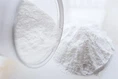
Why Silica is Suitable for Toothpaste Abrasive
Toothpaste is essential for people's daily oral hygiene care. Toothpaste abrasive is an important component of toothpaste. Crystal toothpaste series with silica as abrasive agent can not only achieve good oral cleaning effect, but also bring good aesthetic enjoyment to users. Therefore, silica as a toothpaste abrasive is used more and more in toothpaste. However, due to various reasons such as technical confidentiality, few literatures have reported on the key issues such as the synthesis of silica for toothpaste abrasives.

Because of the silica used in toothpaste abrasives, the particle size of the material is required to be between 3-15 microns, and a higher transmittance and a lower apparent density are required.
The effects of basic reaction conditions such as sodium silicate concentration, synthesis temperature and aging time on the properties of SiO 2 were investigated. The properties of the synthesized products were evaluated by apparent density, transmittance and other important indicators. The results show that with the decrease of sodium silicate concentration in the bottom liquid, the transmittance of the sample increases, but the apparent density decreases accordingly; the decrease of synthesis temperature is beneficial to the decrease of the apparent density and the increase of the transmittance of the sample; the extension of aging time has no significant effect on the transmittance and apparent density of the synthesized sample.
Secondly, in order to further improve the transmittance of the product, the relatively safe electrolytes Na2SO4 and NaCl were selected to investigate the effects of the two electrolytes and electrolytes at different concentrations on the product performance. The physical and chemical properties of the synthesized product were characterized by XRD, SEM, FT-IR and other methods. The results showed that the light transmittance of SiO 2 synthesized by Na 2SO4 and NaCl at the concentration of 0.04-0.12 mol/L had no effect on the light transmittance of SiO 2, while the light transmittance of SiO 2 synthesized by Na 2SO4 with the concentration of 0.08 mol/L could reach 97% and that of SiO 2 synthesized by NaCl with the concentration of 0.04-0.12 mol/L could reach 95% at the synthesis temperature of 85%. The sample is amorphous SiO 2 with particle size less than 15 micron, which meets the requirements of the national light industry standard "QB/T 2346-2007 SiO 2 for toothpaste", and can be used as toothpaste abrasive.
Finally, on the basis of the above research, the effect of adding sulfuric acid on the properties of the product was investigated by fixing the concentration of electrolyte. The physical and chemical properties of the product were characterized by XRD, SEM and FT-IR. The results show that the transmittance of synthetic SiO 2 increases first and then decreases with the increase of the concentration of sulfuric acid added to the bottom liquor of the autoclave without adding electrolyte. Adding appropriate concentration of electrolyte to the bottom liquor of the autoclave can weaken the decreasing trend of the transmittance of synthetic SiO 2 caused by changing the concentration of sulfuric acid added to the bottom liquor of the autoclave; all the samples synthesized are amorphous SiO 2. It can be used as a toothpaste abrasive according to the requirements of QB/T 2346-2007 toothpaste silica.