


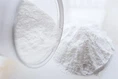
When it comes to silica, there are two main types that are commonly used in industrial applications: precipitated silica and fumed silica. While both types of silica are used as reinforcing agents in rubber and plastic formulations, there are distinct differences between the two.

Precipitated silica is manufactured through a chemical reaction between sodium silicate and sulfuric acid. This type of silica is produced in a wet process, and the resulting product is a fine powder with a porous structure. Due to its high surface area and porosity, precipitated silica is commonly used as a flow aid and thickening agent in a wide variety of applications, including coatings, adhesives, and pharmaceuticals.
In contrast, fumed silica is produced through a gas phase reaction between silicon tetrachloride and oxygen. This results in a highly pure, amorphous silica that has an extremely small particle size and a high surface area. Fumed silica is typically used as a thickening and reinforcing agent in paints, adhesives, and rubbers due to its high surface area and ability to absorb large amounts of liquids. It can also be used as a flow aid and anti-caking agent in powders and granular materials.
Another key difference between the two types of silica is their method of production. Precipitated silica is typically produced in large quantities through a batch process, while fumed silica is produced in smaller quantities through a continuous process. This means that fumed silica can be more expensive than precipitated silica, but it also means that it can be produced with greater purity and with more precise control over its particle size and surface area.
In summary, while both precipitated and fumed silica are commonly used in industrial applications, each has distinct properties that make it more suitable for certain specific applications. Precipitated silica is ideal for use as a flow aid and thickening agent, while fumed silica excels as a reinforcing agent due to its small particle size and high surface area.