


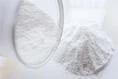
The Impact of Precipitated Silica Partical Size in Coating and Painting
The particle size of precipitated silica has a significant impact on its performance in coatings. Smaller particle size can improve the glossiness and surface smoothness of coatings, but it may also lead to an increase in surface tension, making it easier to form cracks during the drying process. In addition, the uniformity of particle size distribution also has a significant impact on the coating's coverage and glossiness, with narrower particle size distribution typically achieving better coverage effects.

Adding nano silica (with an average particle size of 48 nanometers) to coatings can significantly improve their corrosion resistance and wear resistance, but may reduce their elasticity and anti shrinkage ability. Therefore, selecting the appropriate silica particle size is crucial for optimizing the performance of coatings.
Specifically, smaller particle size silica (such as 10 nanometers) can provide superhydrophobic properties, increasing the anti fouling performance of coatings
However, larger particle sizes (such as 8-10 microns) are more suitable for use in building coatings with thicker coatings, as they are easier to disperse and have less impact on the viscosity of the coating system. The optimal particle size range is usually 5-10 microns to balance extinction, transparency, and anti settling properties.
The influence of particle size and distribution of silica on coating performance is multifaceted and needs to be optimized and selected according to specific application requirements.
Contact Us
Tel: +86-592-5528715
Fax: +86-592-5528716
Email: jk@jksilica.com
Add: Gaosha Industrial Zone, Sha County, Sanming, Fujian, China