


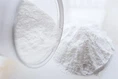
Surface characteristics of precipitated silica(SiO2)
The appearance of silicon dioxide is white, highly dispersed and amorphous powder, and some are processed into particles as products. The ratio is 2.319 ~ 2.653, and the melting point is 1750 ℃. Insoluble in water and most acids, it becomes aggregate fine sand after absorbing water in the air. Soluble in anhydrous aluminum chloride and hydrochloric acid. Stable to other chemicals, resistant to heat, non decomposition and non combustion. High electrical insulation, porous, large internal surface area. Do you know what effect the surface characteristics of precipitated silica have? Let's have a look.

1. Moisture
The water content of precipitated silica includes dispersed water and bound water. The dispersed water on the surface of silica can be easily removed by heating. Too little dispersed water indicates that there is not much light on the surface of silica, which reduces the vitality of silica, promotes the aggregation of silica in the mixing process, and is difficult to diffuse into rubber. Less surface water not only affects the curing rate, but also reduces the reinforcement effect. The dispersed water is slightly higher, the mixed rubber has good operation performance, fast powder, less smoke and dust flying, and the curing rate is slightly faster.
However, the water content is too high, the heat generation is large, and the brittleness is easy Agglomeration and uneven dispersion make the surface of vulcanizate easy to bubble, and the physical and mechanical properties are reduced accordingly. Generally speaking, 6% to 8% of the surface water can best protect the silicon dioxide molecules, thus avoiding the re aggregation of particles. When mixing, it can be evenly distributed in the rubber compound, which is conducive to improving the characteristics and accelerating the curing rate. Bound water is the "interior" of silicon dioxide, which is relatively stable and can only be removed when the temperature is higher than 400 ℃. The general content is 4 0-7.0%。 If there is too much fusion water, it indicates that the content of doubtful glue produced under the condition is high, the vitality of the finished product after drying is small, and the rubber reinforcement effect is small. However, there is little bound water, which indicates that the drying is too heavy, the sanding trend is large, and the reinforcement is not good.
2. PH value
The pH value of silica has a great influence on the vulcanization of rubber compound. Acidic silica delayed the vulcanization of rubber compound, while alkalinity would promote vulcanization, but too high alkalinity was not conducive to reinforcement. PH slightly acidic silica is beneficial to the tensile and wear resistance of rubber and products. Therefore, the PH value of silica by rubber precipitation method is generally 618, close to neutral.
3. Solve surface modification
The surface modification of silicon dioxide refers to the addition of silane coupling agent in silicon dioxide to achieve its hydrophobic purpose. After the silane coupling agent is added, one end of the silane coupling agent CH3O1 (tert butyl) is easy to reflect with the silicone oil on the silicon dioxide surface, and the other end is easy to reflect with the rubber like molecules, that is, the "railway bridge" effect of the silane coupling agent between silicon dioxide and rubber. There are many methods to solve the surface modification of silicon dioxide, and the most commonly used method is to use coupling agent (such as coupling agent Si169).
4. Impact of impurities
Precipitation silica is easy to bring Cu. Fe during manufacturing Mn Although these small impurities have little effect on the properties of rubber materials, in order to make silicone rubber products have excellent anti-oxidation and anti-aging properties, Cu. Fe is still specified Mn content is reduced to a certain extent. GB10517 Requirements for silica by precipitation method: Cu ≤ 30mg/kg, Mn ≤ 50mg/kg, Fe ≤ 1000mg/kg.
Acetate in precipitation silica production is inevitable in production, but the sodium content is too high to be used as natural or rubber reinforcement filler, and the light transmittance of rubber is obviously poor. However, in the production process, control the generation process of reflection, avoid the generation of excessive Na gum and strengthen the washing of semi-finished product slurry. The acetate content can be reduced to less than 0.5%. This precipitation method of silica has little impact on the properties of rubber compound.