


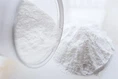

Key functions and Application of White carbon in Coating
As modern coatings evolve toward higher performance, better aesthetics, and eco-friendlier formulations, functional additives play an increasingly crucial role. Among these, white carbon, also widely known as precipitated silica, has become one of the most valuable and versatile materials for coating manufacturers.
With its high purity, controlled particle size, porous morphology, and excellent chemical stability, white carbon provides multiple functional benefits that enhance both the performance and appearance of coatings. Whether used as a matting agent, rheology modifier, anti-settling additive, or anti-blocking component, white carbon enables formulators to meet demanding quality and application requirements.

Key Functions of White Carbon in Coating Application
1.1 Gloss Control & Matting
One of the most important uses of white carbon is as a matting agent. Its controlled particle size creates microscopic surface roughness that scatters incident light, reducing gloss and producing:
Matte finish
Semi-matte finish
Satin finish
Soft-touch matte surface
Compared with traditional matting agents (e.g., wax powders), precipitated silica offers:
Lower gloss at lower dosage
Better transparency
Non-yellowing stability
Improved surface scratch resistance
1.2 Rheology Modification
White carbon increases thixotropy and improves the viscosity profile of coatings. This provides:
Anti-sagging performance
Enhanced brushability and rollability
Better control during spray application
Stability in high-temperature or long-term storage conditions
Its 3D network structure helps achieve ideal flow and leveling properties.
1.3 Anti-Settling and Suspension
In pigmented or metallic coatings, precipitated silica forms a weak gel network that prevents pigments and fillers from settling.
Benefits include:
Uniform color and appearance
Stable viscosity
Reduced hard settling at the bottom of the container
Improved compatibility with metallic flakes
This performance makes silica powder indispensable in automotive refinishing paints, industrial coatings, and water-based systems.
1.4 Surface Hardness & Scratch Resistance
The addition of SiO₂ particles enhances:
Mechanical strength
Abrasion resistance
Surface durability
This is especially valuable in high-wear coatings applied in industrial, automotive, and wood applications.
1.5 Anti-Blocking Performance
White carbon reduces friction between coating layers, preventing sticking or blocking during:
Stacking
Packaging
Processing
Transport
It is widely used in plastic film coatings and UV-curable systems.
1.6 Transparency and Optical Control
Ultra-fine silica grades are engineered to maintain:
High clarity
Optical stability
Minimal haze
This is beneficial in clear coats, varnishes, and transparent protective layers.
2. Advantages of Using Precipitated Silica in Coatings
2.1 High Purity and Stability
White carbon provides excellent chemical inertness:
Non-reactive with resins and additives
Non-yellowing even after long-term exposure
Helps maintain coating transparency
2.2 Eco-Friendly and Safe
Precipitated silica is:
Free from heavy metals
Non-toxic
Environmentally friendly
Compliant with international regulations such as REACH and RoHS
This makes it suitable for sustainable and low-VOC coating systems.
2.3 Excellent Cost-Performance Ratio
Low consumption dosage combined with high performance characteristics makes precipitated silica one of the most economical coating additives.
2.4 Wide Resin Compatibility
Including:
Acrylic systems
Polyurethane coatings
Epoxy coatings
Alkyd and polyester systems
Waterborne coatings
UV-curable systems
3. Major Applications of White Carbon in Coatings
3.1 Wood Coatings
Functional benefits:
Smooth matte effect
Enhanced scratch resistance
Improved tactile feel
Typical dosage: 3%–8%
3.2 Industrial Metallic Paints
Provides:
Anti-settling
Abrasion resistance
Controlled flow behavior
Typical dosage: 3%–10%
3.3 Water-Based Acrylic Paint
Enhances:
Matting
Rheology stability
Typical dosage: 0.5%–2%
3.4 UV-Cured Coatings
Advantages:
High transparency
Good matting efficiency
Enhanced surface strength
Typical dosage: 0.5%–3%
3.5 Automotive & High-Performance Industrial Coatings
Used to improve:
Scratch resistance
Surface hardness
Weatherability
3.6 Plastic Film & Powder Coatings
Improves:
Anti-blocking
Flow and leveling
Thermal stability
4. How to Choose the Right White Carbon Grade
4.1 Based on Gloss Requirements
Larger particle size = deeper matte
Smaller particle size = higher gloss/more transparent matte
4.2 Based on Transparency Needs
Ultra-fine silica is recommended for:
Clear coatings
Transparent UV systems
High-end varnishes
4.3 Based on Resin System
Hydrophobic silica for solvent systems
Hydrophilic silica for water-based systems
4.4 Based on Processing Compatibility
Important parameters:
Oil absorption
pH
Moisture content
Particle hardness
Dispersibility
A professional silica manufacturer can provide technical data sheets and customized recommendations to ensure the best match.
5. Why Work with a Professional Silica Manufacturer
5.1 Stable & Consistent Quality
Reliable particle size control and purity ensure predictable performance.
5.2 Advanced Surface Treatment Technologies
Hydrophobic or functionalized silica enhances compatibility with different coating systems.
5.3 Technical Support
Professional formulators can assist in selecting the appropriate silica grade.
5.4 Customization Capabilities
Matting efficiency, particle size, or surface treatment can be tailored to specific needs.
5.5 Global Supply Reliability
Ensures stable delivery and consistent raw material availability.
6. Future Trends in White Carbon for Coatings
Growth in green and water-based coatings
Increasing demand for soft-touch matte silica
Development of ultra-low-gloss and anti-glare technologies
Expansion in EV, aerospace, and 3D printing coating applications
Greater adoption of functional SiO₂ in high-performance protective coatings