


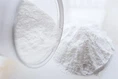
Is Precipitated Silica Water Soluble?
Precipitated silica is a type of synthetic amorphous silica that is widely used in various industries, including food, pharmaceuticals, and personal care products. One of the questions often asked about it is whether it is water-soluble or not.

The short answer is that precipitated silica is not water-soluble. This means that when it is added to water, it does not dissolve but forms a suspension or colloidal solution. The particles of silica are dispersed in water, but they do not dissolve, and they can be easily separated by filtration or centrifugation.
The reason why precipitated silica is not water-soluble is that it has a low solubility due to its large surface area and high surface charge. The surface charge of silica is due to the presence of silanol groups, which are weakly acidic and can dissociate in water to release protons and form negatively charged sites. This surface charge repels other silica particles and prevents them from aggregating and forming a precipitate.
However, there are modified forms of precipitated silica that are partially water-soluble, such as those that have been chemically treated to reduce their surface charge or increase their hydrophobicity. These modified silicas are used in specific applications, such as dispersants, emulsifiers, or viscosity modifiers.
In summary, precipitated silica is not water-soluble, but it can be easily dispersed in water to form stable suspensions or colloidal solutions. Its low solubility and high surface charge make it a valuable material for various industrial applications