


Marketing Presentation | Precipitated Silica Applications
Overview
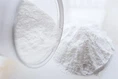
• Hydrochloric acid-processed silica (precipitated silica) is widely used in coatings.
• Provides matting effect, rheology control, and surface property optimization.
• Typical addition range: 1%–10%, depending on gloss and system requirements.
Common Addition Range
• • Basic Matte Effect (1%-3%): Semi-matte finish (30–60 GU)
• • Medium Matte Effect (3%-6%): Full matte finish
• • High Matte Effect (6%-10%): Ultra-matte finish for special applications
• • Industrial coatings: 3%-10% for solventbased semi/full matte effectRecommended Dosage by Coating Type Coating Type Recommended Dosage Main Function Water-based acrylic paint 0.5%-2% Matting, rheology control UV-cured paint 0.5%-3% Matting, improved abrasion resistance Wood coatings 3%-8% Matte effect, improved feel Industrial metallic paint 3%-10% Matting, optimized surface properties Powder coatings 0.1%-0.5% Matting, improved flowabilityKey Factors Affecting Dosage
• • Matting Efficiency: Narrow particle size, high porosity (0.8–2.0 cm³/g) → +30% efficiency
• • System Compatibility: Hydrophilic for waterbased (≤5%), Hydrophobic for solvent-based (≤15%)
• • Performance Balance: Avoid >15% addition to prevent hardness reductionPractical Application Tips
• • Stir thoroughly before use for uniform dispersion • • High-speed dispersion (>2000 rpm) or sand milling recommended
• • Store in dry, ventilated area; seal tightly after use
• • Use remaining materials within 3 monthsCost-Effectiveness
• • Precipitated silica ≈ 40% cheaper than fumed silica
• • Requires higher addition amount (3%-10% vs. 0.5%-3%)
• • Choose based on desired gloss, system, and budget