


1. Introduction
The global detergents and cleaning products market continues to grow steadily, driven by rising hygiene awareness, urbanization, and increasing demand for high-performance yet environmentally responsible cleaning solutions. Consumers today expect cleaning products to deliver strong stain removal, surface protection, and improved aesthetics-without compromising safety or sustainability. As a result, formulators are under pressure to select functional ingredients that offer effective cleaning performance, mild abrasion, and formulation flexibility. Among these ingredients, hydrated silica has emerged as a highly versatile and reliable solution for modern detergents and cleaning products. Widely used as a mild abrasive, thickener, and flow aid, hydrated silica plays a critical role in improving both cleaning efficiency and user experience. This article explores the properties, functions, and advantages of hydrated silica detergent grades, highlighting why silica for cleaning products has become an essential component in household, industrial, and institutional formulations..

2. What Is Hydrated Silica?
Definition and Chemical Characteristics
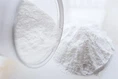
Hydrated silica is a form of amorphous silicon dioxide (SiO₂·nH₂O) produced through controlled chemical processes. Unlike crystalline silica, hydrated silica features a porous structure, high surface area, and adjustable particle morphology, making it suitable for a wide range of functional applications.
Hydrated silica belongs to the broader family of precipitated silica, sharing similar production principles but differing in moisture content, structure, and application focus. In cleaning products, hydrated silica is specifically engineered to deliver controlled abrasiveness and high compatibility with detergent systems.
Its chemical inertness, high purity, and customizable physical properties make hydrated silica an ideal ingredient for formulations requiring reliable performance and regulatory compliance.
Production Process
Hydrated silica is typically produced through a precipitation reaction between sodium silicate and mineral acids, followed by controlled hydration, filtration, drying, and milling. By adjusting parameters such as pH, temperature, reaction time, and drying method, manufacturers can precisely tailor:
Particle size distribution
Surface area
Oil and water absorption
Abrasive strength
These variations allow formulators to select hydrated silica grades optimized for specific cleaning tasks, from gentle surface polishing to enhanced stain removal.
Hydrated Silica vs Other Abrasives
Compared with traditional abrasives such as calcium carbonate, feldspar, or alumina, hydrated silica offers several advantages:
More uniform particle shape
Lower scratch risk on sensitive surfaces
Better dispersion in liquid and paste systems
Improved formulation stability
These characteristics explain why hydrated silica detergent formulations are increasingly preferred over harsher abrasive alternatives.
3. Key Functions of Hydrated Silica in Detergents and Cleaning Products
3.1 Mild Abrasion for Effective Cleaning
One of the primary roles of hydrated silica in cleaning products is providing controlled, mild abrasion. Its porous and rounded particle structure enables efficient removal of grease, stains, and mineral deposits without damaging underlying surfaces.
This balance between cleaning power and surface safety is essential for applications such as bathroom cleaners, kitchen sprays, and multi-surface products.
3.2 Polishing and Surface Brightening
Beyond cleaning, hydrated silica enhances surface appearance by delivering a subtle polishing effect. After use, surfaces appear cleaner, brighter, and more uniform, improving consumer perception of product performance.
3.3 Thickening and Rheology Control
In liquid and paste detergents, hydrated silica contributes to viscosity control and texture enhancement. It helps stabilize suspensions, prevents phase separation, and improves product consistency, especially in abrasive cream cleaners.
3.4 Anti-Caking and Free-Flow Properties
In powder detergents and granular cleaners, hydrated silica acts as an anti-caking agent, improving flowability, preventing moisture-induced clumping, and ensuring uniform dosing during production and use.
3.5 Stability and Compatibility
Hydrated silica exhibits excellent chemical stability across a wide pH range. It remains effective in both alkaline and acidic cleaning systems and is compatible with common surfactants, builders, enzymes, and fragrances.
4. Advantages of Using Hydrated Silica in Cleaning Formulations
4.1 Gentle and Non-Scratching Performance
Thanks to its adjustable abrasiveness, hydrated silica is suitable for cleaning delicate surfaces such as glass, ceramics, stainless steel, enamel, and plastics-without causing visible scratches.
4.2 High Purity and Safety
High-quality hydrated silica features low levels of heavy metals and soluble impurities. It is non-toxic, non-reactive, and compliant with international safety standards, making it suitable for household and institutional products.
4.3 Environmentally Friendly Profile
Hydrated silica is chemically inert and environmentally benign. It supports the development of phosphate-free and eco-friendly detergent formulations aligned with global sustainability trends.
4.4 Cost-Effective Cleaning Efficiency
Due to its multifunctionality, hydrated silica delivers high cleaning efficiency at relatively low dosages, helping manufacturers optimize cost-performance balance.
5. Applications of Hydrated Silica in Detergents and Cleaning Products
5.1 Household Cleaners
Kitchen surface cleaners
Bathroom and toilet cleaners
Cream and paste abrasive cleaners
Multi-purpose household sprays
5.2 Laundry Detergents
Powder detergents (flow aid and anti-caking)
Liquid detergents (rheology control and suspension stability)
5.3 Dishwashing Products
Manual dishwashing liquids
Automatic dishwasher detergents and tablets
5.4 Industrial and Institutional Cleaners
Heavy-duty surface cleaners
Maintenance and sanitation products
Professional cleaning systems
6. How to Select the Right Hydrated Silica Grade
6.1 Particle Size and Abrasiveness
Selecting the correct particle size ensures the desired balance between cleaning strength and surface protection.
6.2 Oil and Water Absorption
These properties influence texture, stability, and dispersibility in different detergent systems.
6.3 Hardness and Shape
Particle hardness and morphology directly affect cleaning efficiency and polishing performance.
6.4 Compatibility with Surfactants and Additives
Hydrated silica should be evaluated for compatibility with enzymes, builders, bleaching agents, and fragrances to ensure formulation stability.
7. Hydrated Silica vs Precipitated Silica in Cleaning Products
While hydrated silica and precipitated silica share a similar chemical origin, they differ in structure and application focus. Hydrated silica is often preferred for mild abrasive cleaning, while certain precipitated silica grades may be used for reinforcement or absorption functions.
In some advanced formulations, both materials can be used complementarily to achieve multifunctional performance.
8. Market Trends and Future Outlook
The demand for gentle yet effective cleaning products continues to rise globally. Consumers increasingly favor products that protect surfaces, reduce environmental impact, and maintain high cleaning standards.
As a result, innovation in silica for cleaning products is accelerating, with manufacturers developing tailored hydrated silica grades to meet evolving regulatory, performance, and sustainability requirements.