


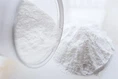
Application of Hydrochloric Acid Process Silica in Coatings: Performance Advantages and Selection Guide

In the modern coatings industry, which prioritizes both high performance and environmental protection, the selection of functional additives is crucial. Among them, silica, as a classic inorganic material, has always held an important position due to its unique multifunctionality. And among the many preparation processes, hydrochloric acid process silica, also known as precipitated silica, has become the mainstream choice for coating-grade silica due to its excellent cost-effectiveness and wide range of applications. This article will delve into why hydrochloric acid process silica has become a "multitool" in coating formulations and provide practical selection and application guidelines.
I. Core Concept Analysis: What is Hydrochloric Acid Process Precipitated Silica?
To understand its advantages, we must first clarify its origin. Hydrochloric acid process silica, as the name suggests, refers to an amorphous silica product obtained by using sodium silicate (commonly known as water glass) solution as raw material, reacting with hydrochloric acid for acidification, and then undergoing a series of processes including neutralization, precipitation, filtration, washing, drying, and precise pulverization. Because its core step involves chemically "precipitating" the silica from the solution, it is also called precipitated silica.
This process route gives the product unique physicochemical characteristics: its primary particle size is usually in the micron or sub-micron range, with high porosity and controllable specific surface area. Compared with fumed silica, which is prepared using a high-temperature hydrolysis process and is expensive, precipitated silica maintains many excellent properties while possessing a significant cost advantage, enabling its large-scale application in industrial coatings, wood coatings, architectural coatings, and other fields. It is a truly cost-effective coating-grade silica.
II. Core Functions and Application Advantages of Coating-Grade Silica
When hydrochloric acid process silica is precisely designed to specifically serve coating systems, it exhibits remarkable multifunctionality.
Efficient Matting Performance
This is the most well-known function of coating-grade silica. Its working principle is: when the paint film dries and cures, these tiny, hard silica particles are evenly distributed on the surface of the paint film, forming microscopic unevenness. When light shines on the paint film, diffuse reflection occurs, significantly reducing surface gloss and producing a matte effect. By selecting products with different particle sizes and size distributions, coatings engineers can precisely design various gloss effects, from silky smooth to deep matte, widely used in high-end furniture paints, decorative paints, and industrial topcoats.
Excellent Thickening and Anti-Settling Effects
The surface of precipitated silica particles is rich in silanol groups, which can interact with each other through hydrogen bonds, forming a weak but effective three-dimensional network structure in the coating system. This structure gives the coating good thixotropy-that is, high viscosity when at rest, preventing pigment and heavy filler sedimentation and agglomeration; and rapid viscosity reduction when subjected to shear force (such as stirring, brushing, spraying), facilitating application. This not only ensures the stability of the product throughout its storage period but also effectively avoids sagging during application, which is especially crucial in industrial anti-corrosion coatings requiring specific film thickness.
Significant Abrasion and Scratch Resistance
Silica itself has a high Mohs hardness. When these hard particles are evenly dispersed and firmly embedded in the paint film, they can greatly improve the macroscopic hardness, mechanical strength, and abrasion resistance of the paint film. This is an indispensable key performance for coating systems that are frequently subjected to wear, such as floor paints, interior paints for transportation vehicles (trains, airplanes), and various industrial protective coatings.
Excellent Anti-Caking and Anti-Adhesion Properties
For coil coatings, packaging coatings, or painted products that require stacking and storage, paint film surface adhesion is a troublesome problem. The micro-protrusions formed by coating-grade silica on the paint film surface can greatly reduce the actual contact area between coatings, thereby effectively reducing their adhesion tendency and ensuring product quality and transportation safety.
III. Practical Guide: How to Choose and Apply Correctly?
To fully unleash the potential of hydrochloric acid-processed silica, correct selection and application are key.
Interpretation and Selection of Key Indicators
Particle size and distribution: This is the most critical factor affecting matting efficiency and gloss control. Generally, larger particle sizes result in higher matting efficiency, but the paint film will feel rougher, and transparency may decrease. Conversely, fine particle size products provide a smoother feel and higher transparency, but the matting efficiency is relatively lower. Therefore, a balance needs to be struck based on the desired gloss and feel.
Pore structure and oil absorption value (DBP absorption value): The oil absorption value is directly related to the thickening ability of precipitated silica. High oil absorption products absorb more resin and solvent in the coating system, leading to a significant increase in viscosity and strong thickening effect, but may negatively affect the gloss of the paint film. Low oil absorption products are more "gentle," mainly used for matting, and have little impact on the system viscosity.
Surface treatment (hydrophilicity and hydrophobicity): This is key to determining compatibility and dispersibility. Ordinary hydrochloric acid-treated silica is hydrophilic and more suitable for water-based coating systems. Hydrophobic products, surface-treated with organosilanes or silicone oils, have better compatibility with solvent-based coating systems, disperse more easily, effectively reduce the impact on system viscosity, and provide better anti-settling and thixotropic effects.
Application Process and Precautions
Dispersion is key: It is essential to ensure that the silica particles are fully dispersed to form a uniform microstructure. It is recommended to use a high-speed disperser, slowly adding the powder to the vortex of the paint at an appropriate speed to avoid the formation of "powder clumps" that are difficult to break up.
Optimize the addition sequence: It is generally recommended to add it during the paint mixing stage after the pigment paste grinding is completed. This avoids excessive shearing of the silica during the grinding process, which could damage its structure and affect the final performance.
Pay attention to formula compatibility: Be aware of potential interactions with certain additives, especially some leveling agents and wetting and dispersing agents. It is recommended to verify compatibility through experiments to avoid paint film defects such as cratering and oil separation.
IV. Market Prospects and Development Trends
With increasingly stringent global environmental regulations, environmentally friendly coatings such as water-based coatings, powder coatings, and high-solids coatings have become an irreversible development trend. This places higher demands on coating-grade silica, while also bringing huge market opportunities. The future development trends will focus on:
Functional refinement: Developing customized products with narrower particle size distribution and specific surface characteristics (such as controllable hydrophobicity) to meet the needs of specific high-end applications.
High performance: Further enhancing its auxiliary functions in reinforcement, corrosion resistance, and heat insulation through composite processes or new surface treatment technologies.
Green and environmentally friendly: Optimizing production processes, reducing energy consumption, and ensuring that the product itself meets stricter environmental and health standards.