


Yo, it's me, your go - to silica powder supplier. I get a ton of questions about the difference between surface - treated silica powder and untreated silica powder. Today, I'm gonna break it down for you and show why these differences matter for various applications.
Let's start with untreated silica powder. Untreated silica powder, as the name suggests, is just straight - up silica in its natural form. It's a fine, white powder made up of silicon dioxide. The chemical formula is SiO₂, and it's one of the most abundant compounds on Earth.
The raw material for untreated silica powder usually comes from quartz deposits. After mining, the quartz is crushed and ground to different particle sizes. In general, untreated silica has a high surface area, which can be good for some applications. Its surface is quite reactive due to the presence of silanol groups (Si - OH). These groups can form hydrogen bonds with other substances, which is useful in some bonding and adhesion processes.
One of the main uses of untreated silica powder is in the construction industry. It can be added to concrete to improve its strength and durability. The high surface area allows it to react with calcium hydroxide in the concrete, forming additional cementitious compounds. This in turn makes the concrete denser and less porous, which helps to resist water penetration and chemical attacks.
Another area where untreated silica powder is commonly used is in the manufacturing of glass. It serves as the main raw material for glass production. The high melting point of silica allows the glass to have good thermal stability. When heated, the silicon - oxygen bonds in the silica rearrange to form a glassy network structure.
However, untreated silica powder also has its limitations. For example, it has poor dispersibility in organic solvents and polymers. The silanol groups on its surface can cause the particles to agglomerate, which makes it difficult to achieve a uniform distribution in the matrix. This agglomeration can lead to reduced mechanical properties in the final product.
Now, let's talk about surface - treated silica powder. Surface treatment is a process where the surface of the silica powder is modified to change its properties. There are different types of surface treatments, but the most common ones involve coating the silica particles with organic compounds.
One of the main reasons for surface - treating silica powder is to improve its dispersibility. By coating the surface with organic molecules, the surface energy of the silica particles is reduced. This makes it easier for the particles to separate from each other and disperse evenly in organic matrices such as polymers. For instance, in the production of rubber, surface - treated silica powder Silica Filler For Silicone Rubber can be used as a reinforcing filler. The improved dispersibility ensures that the rubber has better mechanical properties, such as higher tensile strength and tear resistance.
Surface - treated silica powder also has better compatibility with polymers. The organic coating can interact with the polymer chains, forming a strong interface between the filler and the matrix. This enhances the overall performance of the composite material. For example, in the production of plastic products, surface - treated silica can improve the stiffness and heat resistance of the plastic.
In the cosmetic industry, surface - treated silica has a wide range of applications. In nail polish, for example, the Silica Sedimentation Method Used For Nail Polish can benefit greatly from using surface - treated silica powder. It helps to prevent the settling of pigments and provides a smooth and shiny finish. The surface treatment can also improve the adhesion of the nail polish to the nail, making it last longer.
When it comes to food - grade applications, surface - treated silica powder is also very important. Silicon Dioxide For Food - Grade Silicon Rubber From China Supplier needs to meet strict safety and performance standards. Surface - treating the silica can ensure that it doesn't react with the food or any other substances in contact with it. It can also improve the flowability and anti - caking properties of food products.
The process of surface treatment is not without its challenges. It requires careful control of the reaction conditions, such as temperature, pressure, and the amount of the treating agent. The choice of the treating agent also matters a lot. Different treating agents can impart different properties to the silica powder. For example, some agents can make the silica hydrophobic, which means it repels water. This can be useful in applications where moisture resistance is required.
Cost is another factor to consider. Surface - treated silica powder is generally more expensive than untreated silica powder. The cost of the treatment process, including the cost of the treating agent and the energy required for the reaction, adds to the overall price. However, for many applications, the improved performance justifies the higher cost.
So, which one should you choose, surface - treated or untreated silica powder? Well, it depends on your specific application. If you need a simple and cost - effective filler and don't mind some agglomeration issues, untreated silica powder might be a good choice. For example, in some large - scale construction projects where the cost is a major concern, untreated silica can be used.

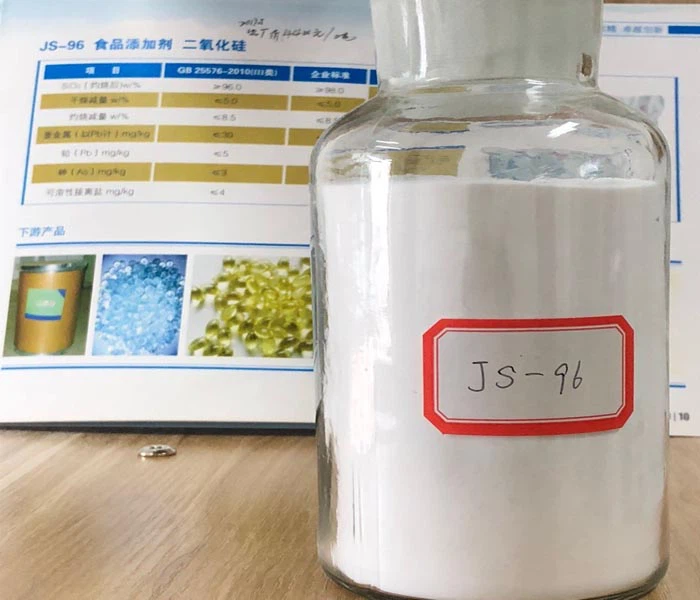
On the other hand, if you need high - performance materials with excellent dispersibility, compatibility, and specific surface properties, surface - treated silica powder is the way to go. In industries such as electronics, aerospace, and high - end cosmetics, the superior properties of surface - treated silica are often a must.
As your silica powder supplier, I can offer you both untreated and surface - treated silica powder. I've got a wide range of particle sizes and surface treatment options to meet your specific needs. Whether you're working on a small - scale project or a large - scale industrial application, I can provide the right silica powder for you.
If you're interested in learning more about our silica powder products or want to discuss your specific requirements, don't hesitate to reach out. We can have a chat about which type of silica powder would be the best fit for your project. Let's work together to find the perfect solution for your business.
References
- "Silica in Industry: Properties and Applications" by John Smith
- "Surface Treatment of Inorganic Fillers" by Jane Doe
- "Advances in Silica - Based Materials" by Robert Johnson